


Jamie Mielczarek
Mortgage Adviser & Protection Specialist
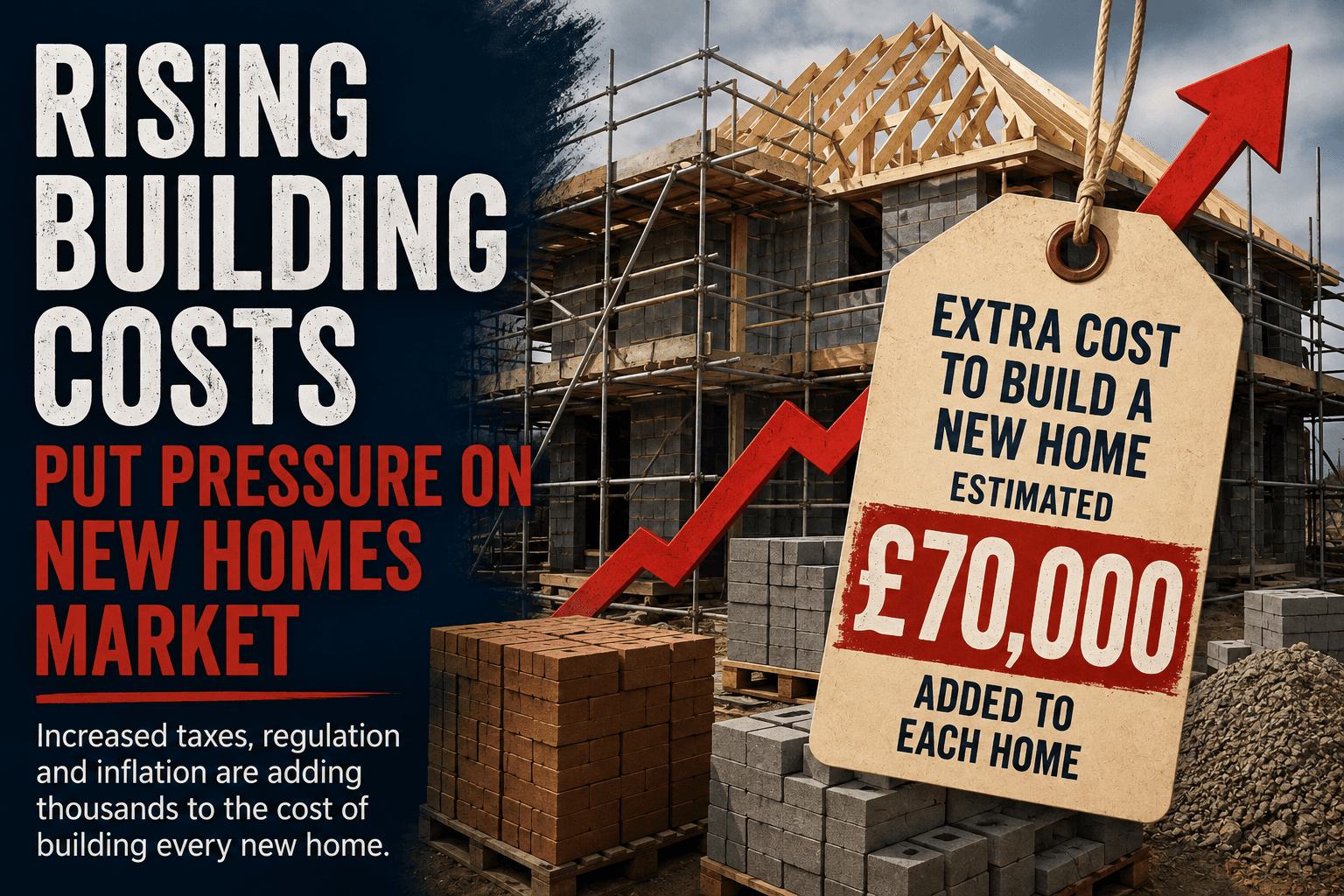
Building the homes Britain needs is becoming increasingly expensive, adding another challenge to an already difficult housing market.
According to figures highlighted by the Home Builders Federation, the combined impact of higher taxes, regulatory requirements and inflation is estimated to have increased the cost of delivering a new home by around £70,000.
It's a significant additional burden at a time when developers are already dealing with weaker demand, higher borrowing costs and uncertainty about the direction of the property market.
Why rising construction costs matter
The problem extends beyond the housebuilding industry.
When the cost of developing new homes rises substantially, some developments can become less financially viable. Builders may reduce the number of properties they plan to construct, delay developments or reconsider projects altogether.
For homebuyers, that matters because the UK already faces considerable pressure on housing supply.
If fewer properties are built while demand for homes remains, buyers could find themselves competing over a more limited number of available properties.
Can government support make a difference?
There are measures being introduced to encourage housebuilding, including plans for a National Housing Bank with £16bn of financial capacity to help support development.
The difficulty is that building homes takes time.
A development can take years to progress through land acquisition, planning, construction and eventual completion. Financial support announced today therefore doesn't necessarily translate into thousands of additional homes becoming available tomorrow.
That's why there is growing pressure for measures that can help stimulate activity sooner rather than later.
What does it mean if you're hoping to buy?
Headlines about housing shortages and affordability can understandably make getting onto the property ladder appear increasingly difficult.
But the wider housing market and an individual's ability to obtain a mortgage aren't necessarily the same thing.
Mortgage lenders assess borrowers differently. Deposit requirements, affordability calculations and attitudes towards more complicated financial circumstances can vary considerably between lenders.
Someone who doesn't meet the criteria of one lender may therefore have options elsewhere.
This is particularly important for first-time buyers who may be trying to understand how much they need to save and what they could realistically afford.
Find out what's possible before ruling yourself out
The housing market undoubtedly has challenges ahead. Increasing the supply of homes while keeping them affordable will require more than announcements and long-term ambitions.
For individual buyers, however, the important thing is to concentrate on the factors they can control.
Understanding your borrowing position, deposit requirements and mortgage options before beginning your property search can put you in a much stronger position.
If you're considering buying a home, speak to our mortgage team. We can look at your circumstances, explore the available options and help you understand what you may realistically be able to borrow.
Share this post

Jamie Mielczarek, founder of Chetwood Lloyd Mortgages, brings 25 years of experience and a commitment to honest, client-first advice rooted in family values and full independence.